What should a safety lead do when lone workers cover a night shift with no supervisor on site?
A worker alone at three in the morning has no one to notice a fall, a fume, or a medical event. How to build check-ins, task rules, and escalation that hold up when everything else is asleep.
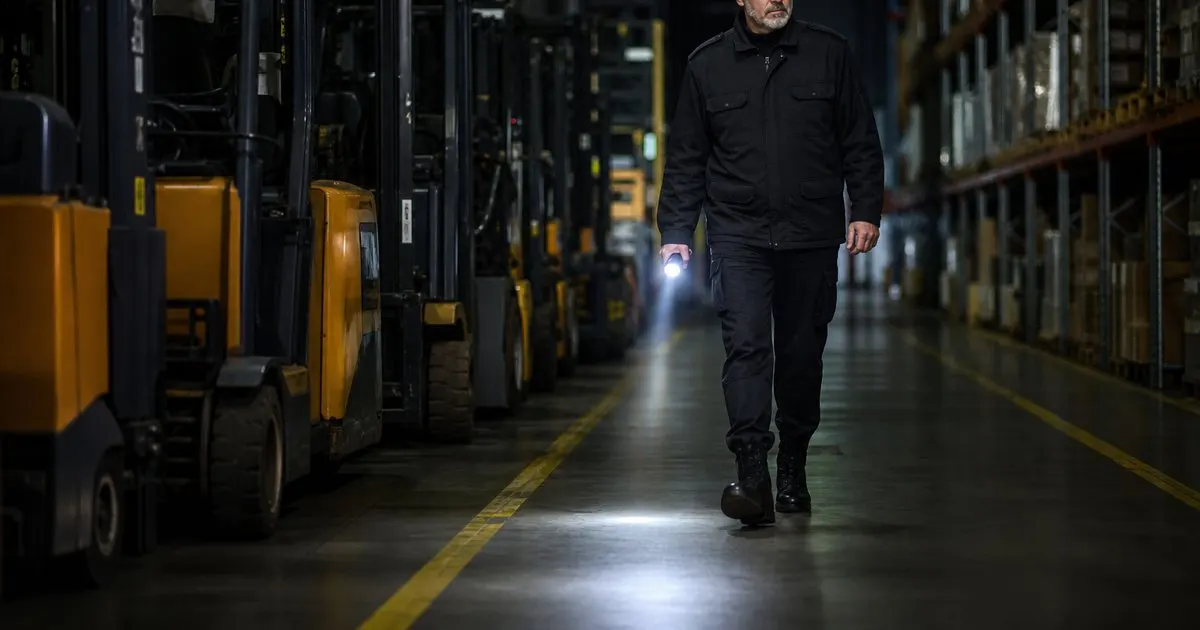
What lone actually means, and why night raises the stakes
A lone worker is anyone who cannot be seen or heard by a coworker and cannot expect to be checked on within a reasonable time. That covers the obvious cases, like a night security guard or a solo maintenance tech, but it also covers a forklift driver in a far corner of a large warehouse, a lab worker after hours, and a cleaner in a building everyone else has left. There is no single federal rule that covers every lone worker, but the general duty to provide a workplace free of recognized hazards applies at three in the morning exactly as it does at noon.
Night makes each hazard worse in predictable ways. Fatigue degrades judgment and reaction time. Lighting is often worse in areas that were not designed for night work. Emergency services and the company's own responders are slower to arrive. And the psychological effect of being alone in a large building makes some people take shortcuts they would not take with colleagues watching. The safety lead's job is to design a routine that assumes something will go wrong on a night nobody expects it to. Related: How can an EHS manager spot workplace safety trends before they turn into serious injuries?
Keep reading: Why should a workplace log near-misses when nobody was actually hurt in the incident?, How can a workplace make incident reporting fast enough that frontline workers actually use it?, How do you make sure a workplace safety alert reaches the right person immediately?. See how SafetyPingr helps you workplace safety incident logging and alerts.
Check-ins that survive a bad night
The core of any lone worker system is a check-in schedule with a real consequence when a check-in is missed. Decide the interval based on the hazard: a guard walking a route might check in hourly, while someone doing electrical work or entering a confined area should be on a much shorter interval or not be alone at all. Then define what happens when a check-in does not arrive. Who gets alerted? After how many minutes? What do they do? A check-in system that nobody monitors is worse than none, because it creates false confidence.
Write the escalation ladder down and test it. A missed check-in should first prompt the worker (a call or message), then alert a designated on-call person, then, after a defined interval with no response, trigger a physical check or an emergency services call. Every person on that ladder needs to know they are on it, needs to have their phone on, and needs to have actually been alerted at least once in a drill. The failure mode we see most often is an on-call contact who did not know they were the on-call contact until the night it mattered.
Tasks a lone worker should never do alone
Some work simply should not happen without a second person present, regardless of check-ins. Confined space entry, work at height without fall protection already rigged, live electrical work, handling of chemicals with immediate acute effects, and operating equipment that can trap or pin the operator all belong on that list. A lone worker who encounters one of these tasks during a night shift needs a clear instruction: do not proceed, log it, and leave it for the day crew. Make that instruction explicit so the worker is not weighing it against a desire to be helpful.
For everything else, reduce the consequences of an unnoticed problem. Keep lone workers out of remote areas where possible, or improve lighting and access there. Position first-aid supplies and emergency shutoffs along their route. Give them a way to call for help that does not depend on reaching a wall phone, and make sure the building's own alarms will reach someone if the lone worker cannot. The question to ask for every task is simple: if this person is unconscious in fifteen minutes, how long until someone knows? Related: How can a workplace make incident reporting fast enough that frontline workers actually use it?
Alerts, panic paths, and testing the whole chain
Technology helps here and does not need to be elaborate. A phone with a check-in app, a wearable with a panic button, or a scheduled message that must be acknowledged all work, provided they connect to a person who will act. A lone worker who reports a hazard or a near miss at night also needs somewhere for that report to go immediately, not into an inbox that opens at eight. This is one of the reasons alert routing matters more at night than during the day; a report filed at two in the morning is only useful if it reaches the on-call lead at two in the morning. Related: How do you make sure a workplace safety alert reaches the right person immediately?
Test the whole chain at least quarterly and after any change in staff. Have a night worker deliberately miss a check-in and time how long it takes for someone to respond and what they do. Log the result as you would log a drill, including what failed. Review night-shift incident and near-miss reports separately from day-shift ones, because the patterns differ and a small number of night events can be lost in the daytime volume. A lone worker program is not a policy document; it is a chain of people and tools that either works at three in the morning or does not, and the only way to know is to try it. Related: Why should a workplace log near-misses when nobody was actually hurt in the incident?
- Lone means unseen and unheard, which includes remote corners of a large facility, not just solo shifts.
- Set check-in intervals by hazard and define exactly who is alerted, when, and what they do when one is missed.
- List the tasks a lone worker must never start alone and tell them to leave those for the day crew.
- Drill the escalation chain at least quarterly and review night-shift reports separately from day-shift ones.

Julien Jimenez
Julien Jimenez is an independent software builder based in Paris. He designs, ships, and operates focused SaaS products for small businesses and independent professionals. Read the full author page.
Log Incidents, Alert The Right People
Workplace safety incident logging and alerts. SafetyPingr is built to help you put this into practice.
Start free trialMore from the SafetyPingr blog

Get the SafetyPingr playbook
Practical guides on workplace safety, straight to your inbox as we publish them. No spam, unsubscribe any time.