How do you make incident reporting work for a crew that speaks several different languages?
A hazard that cannot be described in a language the worker is comfortable with does not get reported. Practical ways to design reporting and training so language stops being a filter.
Where language actually breaks the reporting chain
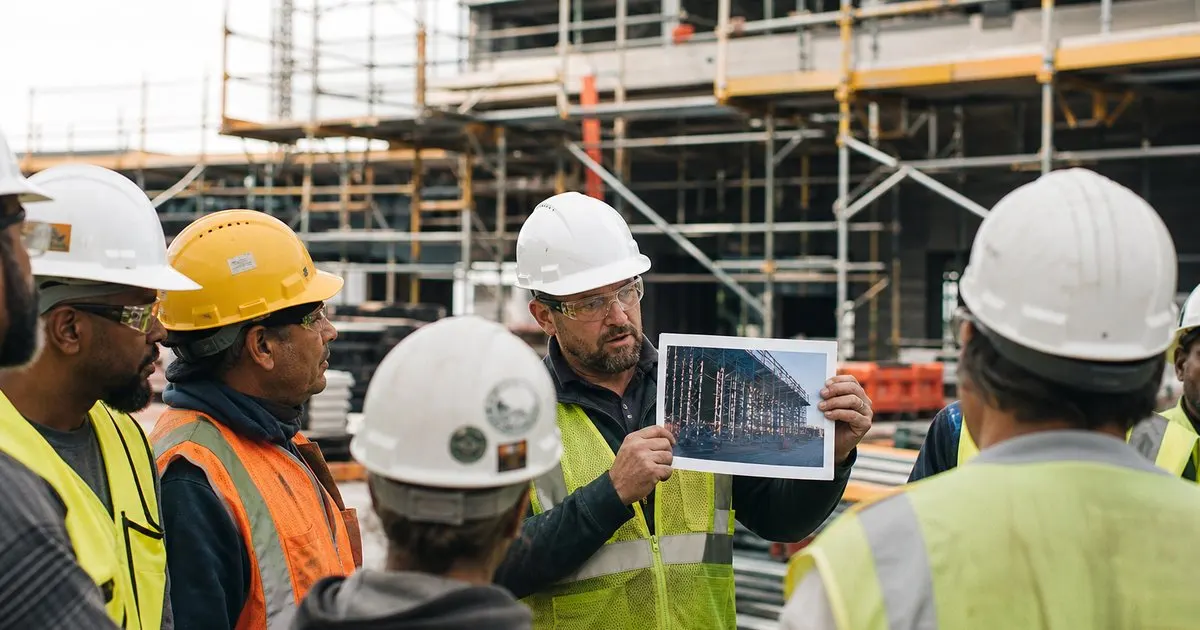
Language does not usually stop a worker from noticing a hazard. It stops them at the moment of describing it. A form written in dense English asks a worker to translate what they saw into a language they may read slowly and write with difficulty, in front of a supervisor, on a time limit. Faced with that, most people decide the hazard was not serious enough to bother. The result is a reporting system that quietly selects for fluent workers, and a log that under-represents exactly the crews doing the most physical work. Related: How can a workplace make incident reporting fast enough that frontline workers actually use it?
The same filter applies to training. A safety orientation delivered in fast English with a written quiz measures English comprehension, not safety knowledge. OSHA has been clear for years that employers are expected to provide training in a language and vocabulary workers can understand, and enforcement follows that expectation. Beyond compliance, the practical reality is that a worker who nodded through a training they did not follow will not know what to report or how, and that gap shows up as injuries later. Related: How can an EHS manager spot workplace safety trends before they turn into serious injuries?
Keep reading: Why should a workplace log near-misses when nobody was actually hurt in the incident?, How can a workplace make incident reporting fast enough that frontline workers actually use it?, How do you make sure a workplace safety alert reaches the right person immediately?. See how SafetyPingr helps you workplace safety incident logging and alerts.
Design the report to need less language
The most effective change is structural: reduce how much writing a report requires. A good mobile report can be almost entirely pick-lists and pictures. Choose the location from a list or a map. Choose the type of event from icons. Take a photo of the hazard. Add a voice note in whatever language is comfortable. Type a sentence if you want, but do not require one. A report built this way can be filed by someone with limited English in under a minute, and it often carries more useful information than a paragraph of prose would.
When we designed the reporting flow in SafetyPingr we kept this principle at the center, but the principle is not tied to any tool. A paper form can do the same thing with checkboxes, a site diagram to mark, and a space that says 'draw or describe.' The question to ask of any form is how many written words it demands before it is useful. Every required sentence is a barrier, and the workers on the other side of that barrier are the ones you most need to hear from.
Translate the training, not just the poster
A translated poster on the wall is a start and nowhere near enough. What matters is that the orientation, the equipment-specific training, and the toolbox talks happen in languages the crew actually speaks. That does not always mean hiring translators. It can mean bilingual leads delivering talks in two languages, short video segments recorded once in each language and reused, and translated versions of the core procedures that workers can keep on their phones. The investment is front-loaded; once the materials exist, they get used for years.
Verify understanding with demonstration rather than a written quiz. Ask the worker to show you the lockout steps on the machine, walk you to the assembly point, or point out the three hazards on this task. Demonstration works in any language and is a better test of what someone will actually do than any multiple-choice question. Record that the training happened and how understanding was confirmed, because that record is what an inspector will ask for and what you will want if there is ever a dispute.
Bilingual leads, reading back, and closing the loop
The people who make multilingual reporting work are usually bilingual crew leads, and they are often doing that job informally and unpaid. Recognize it formally. Make it part of their role, train them on the reporting process, and make sure the crew knows they can report through that person verbally and it will be entered faithfully. Then have the lead read the entry back to the reporter in their language before it is submitted. That read-back step catches mistranslation and shows the worker that their words are being recorded as they meant them. Related: How do you make sure a workplace safety alert reaches the right person immediately?
Closing the loop matters even more in a multilingual crew, because workers who struggled to file a report need to see that it was worth the effort. When a hazard is fixed, tell the crew in their language, ideally naming the fact that a report led to the fix. Keep a simple count of reports by crew or shift and watch for groups that never report; that silence is the clearest sign the process is still filtering someone out. A crew that never files a hazard report is not a crew without hazards. Related: How can a manager encourage workers to report hazards without fear of being blamed?
- Language rarely stops workers from seeing a hazard; it stops them at the moment of describing it in writing.
- Build reports around location pick-lists, photos, icons, and voice notes so a sentence of text is optional.
- Deliver training and toolbox talks in the crew's languages and verify understanding by demonstration.
- Formalize bilingual leads, use read-back before submitting, and watch for crews that never report.

Julien Jimenez
Julien Jimenez is an independent software builder based in Paris. He designs, ships, and operates focused SaaS products for small businesses and independent professionals. Read the full author page.
Log Incidents, Alert The Right People
Workplace safety incident logging and alerts. SafetyPingr is built to help you put this into practice.
Start free trialMore from the SafetyPingr blog


Get the SafetyPingr playbook
Practical guides on workplace safety, straight to your inbox as we publish them. No spam, unsubscribe any time.