How much should a warehouse change its daily safety routine when summer heat hits the floor?
Heat turns ordinary tasks into hazards and turns a normal near miss into a heat-stress signal. Here is what to adjust in the routine, and what to keep logging.
Heat changes the risk profile of ordinary work
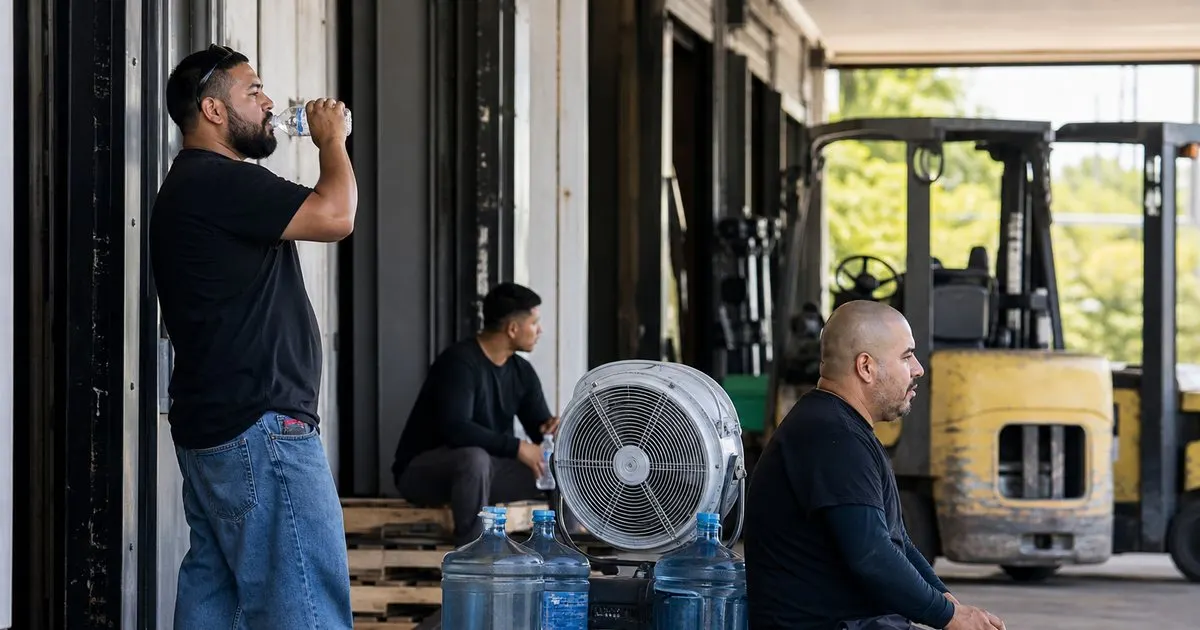
Most warehouses do not think of themselves as heat-hazard workplaces. There is no furnace and no foundry. But a metal-roofed building with limited airflow, dock doors open to a hot parking lot, and people moving pallets all day can put workers under serious heat load, and the trailers they load and unload are often hotter still. The tasks do not change in summer. What changes is the margin: a worker who is dehydrated and fatigued makes judgment errors, loses grip, and moves more slowly around forklifts than the driver expects. Related: How can an EHS manager spot workplace safety trends before they turn into serious injuries?
This is why heat shows up in incident logs indirectly. The July record looks like a cluster of dropped loads, minor cuts, a twisted ankle, and a forklift near miss, and none of those reports mention heat. Only when you look at the time of day and the location, usually mid afternoon near the docks or inside trailers, does the pattern appear. Treating heat as its own hazard category in your logging is the first change worth making, because it lets you see the problem instead of a scatter of unrelated events. Related: Why should a workplace log near-misses when nobody was actually hurt in the incident?
Keep reading: Why should a workplace log near-misses when nobody was actually hurt in the incident?, How can a workplace make incident reporting fast enough that frontline workers actually use it?, How do you make sure a workplace safety alert reaches the right person immediately?. See how SafetyPingr helps you workplace safety incident logging and alerts.
Adjust the schedule, the water, and the rest
Federal guidance and several state standards agree on the fundamentals: water available and close to the work, shade or a cooled area for rest, rest breaks that increase as heat increases, and a plan for the first days of a heat wave when bodies have not adapted. New hires and workers returning from a week or more away are at the highest risk because they have lost their acclimatization, and the routine should treat their first several days back in heat as a period of reduced pace and closer observation. Related: How do you run a toolbox talk that workers actually remember once they are back on the floor?
Concretely, that means moving trailer unloading to the earliest part of the shift where possible, staging water inside the trailer bays rather than at the break room, and making rest breaks in a cooled space mandatory and scheduled rather than something a worker has to ask for. Asking for a break in front of a crew that is behind schedule is exactly the kind of social friction that keeps people working past the point of safety. Building the break into the routine removes the decision from the individual.
Watch for symptoms and make stopping normal
Everyone on the floor should be able to recognize the early signs of heat illness in themselves and in the person next to them: heavy sweating that suddenly stops, confusion, dizziness, nausea, headache, cramps, unusual irritability. Supervisors should be walking the hot zones during the afternoon rather than watching from an office, and they should be looking at people, not just at throughput. A worker who has gone quiet and is moving oddly is a medical situation, not a productivity one.
The single most important cultural rule is that anyone can stop work for heat symptoms without permission and without consequence. Say it in the toolbox talk, put it in writing, and then back it up the first time it happens. If a lead ever criticizes someone for stepping out to cool down, every worker who saw that will push through next time, and pushing through is how heat stroke happens. Make the stop easy to report as well, so that you can count how often it happens and where. Related: How can a manager encourage workers to report hazards without fear of being blamed?
Log heat events so next summer is easier
Treat every heat-related stop, symptom report, or first-aid case as a reportable event in your log, tagged as heat, with the location, time, and the task involved. Do the same for near misses that occurred in hot zones even when the report does not mention heat. By the end of the season you will have a map of where and when heat load is worst in your building, and that map is worth more than any generic guidance because it is specific to your docks, your roof, and your schedule.
Use that record over the winter to plan. Maybe the answer is fans and air movement in two specific bays. Maybe it is shifting a receiving window earlier or adding a shaded rest station near the docks. Maybe it is simply starting the summer routine two weeks earlier next year. Whatever you decide, the log turns heat from an annual surprise into a managed hazard with a plan, and it gives you a documented basis for that plan if anyone asks why you made the changes you made.
- Heat rarely appears in incident reports by name; it shows up as a mid-afternoon cluster of ordinary errors near docks and trailers.
- Schedule water, cooled rest, and breaks into the routine so no worker has to ask for them in front of a crew.
- Give new and returning workers several days of reduced pace and closer observation while they acclimatize.
- Tag every heat stop, symptom, and hot-zone near miss in the log to build a building-specific plan for next year.

Julien Jimenez
Julien Jimenez is an independent software builder based in Paris. He designs, ships, and operates focused SaaS products for small businesses and independent professionals. Read the full author page.
Log Incidents, Alert The Right People
Workplace safety incident logging and alerts. SafetyPingr is built to help you put this into practice.
Start free trialMore from the SafetyPingr blog


Get the SafetyPingr playbook
Practical guides on workplace safety, straight to your inbox as we publish them. No spam, unsubscribe any time.